In a past post on a Synthwave Music Tech Project, I wrote about how genre-based projects provide a useful set of creative constraints for music tech students. The book Electronic Music School: A Contemporary Approach to Teaching Musical Creativity by Ethan Hein and Will Kuhn is an excellent resource for getting started with implementing these types of projects. It includes a few projects that are already fully baked in the sense that you can follow along yourself and teach them to students without having to do all the research and planning from scratch.
However, with musical sub-genres constantly evolving and emerging, it’s extremely useful to be able to research and design new projects as well. If you reference “the project formula” that Kuhn and Hein outline, you can easily begin designing your own projects as needed. And because musical tastes are ever shifting, you can let students be your guide in terms of exposing to you to new genres and letting you know which styles are in fashion or of most interest to them. For me, a recent example of this was the discovery of phonk music.
Phonk is probably a genre that I would have never never known about until students started referencing it in our classroom. According to Wikipedia, phonk “is a subgenre of hip hop and trap music directly inspired by 1990s Memphis rap”. It seems to be a genre that really blew up in the late 2010’s and into the 2020’s on social media platforms. I might describe it as aggressively digital lo-fi, with lots of distorted sounds and a signature use of a tuned cowbell for melodies.
As with most modern production styles, there are a ton of tutorials out there for making phonk music and it’s very accessible in terms of being able to create convincing type beats in most DAW’s from Soundtrap to Abelton. In my own research and planning, I found this Native Instruments post to be concise and helpful: What is phonk music? A beginner’s guide and how to produce it. The steps provided became the framework for the project guide I would make and process I wanted students to follow.
For this music tech phonk project, I decided to not use a template Live Set as scaffold and have the students build things up from scratch in Ableton Live. I thought this was important because it would give students more experience with how to access the various devices, instruments and effects in Live and add them to a Live Set. Also, students were engaging with this project after they had already built up a semester’s worth of experience creating with Ableton Live–including other genre projects using both templates and creating from scratch.
There are certain technical requirements of the project, such as which instruments to use, programming a four on floor beat at a certain tempo and tuning a cowbell sample to make a minor mode melody. As the project progresses though, students will make more creative choices with how to apply effects and arrange the different tracks that they make. Also the types of melodies and basslines that the students create should all be relatively individualized since they have the choice how to program the patterns themselves.
Overall, because phonk has a few highly identifiable tropes and it relies heavily on programming MIDI in a DAW, I believe it will be a “low floor” that students can reach in terms of making a successful sounding project. This is the first time I’m running this project, but I’m really encouraged so far by the progress I’m seeing students make as they move through the project guide during class.
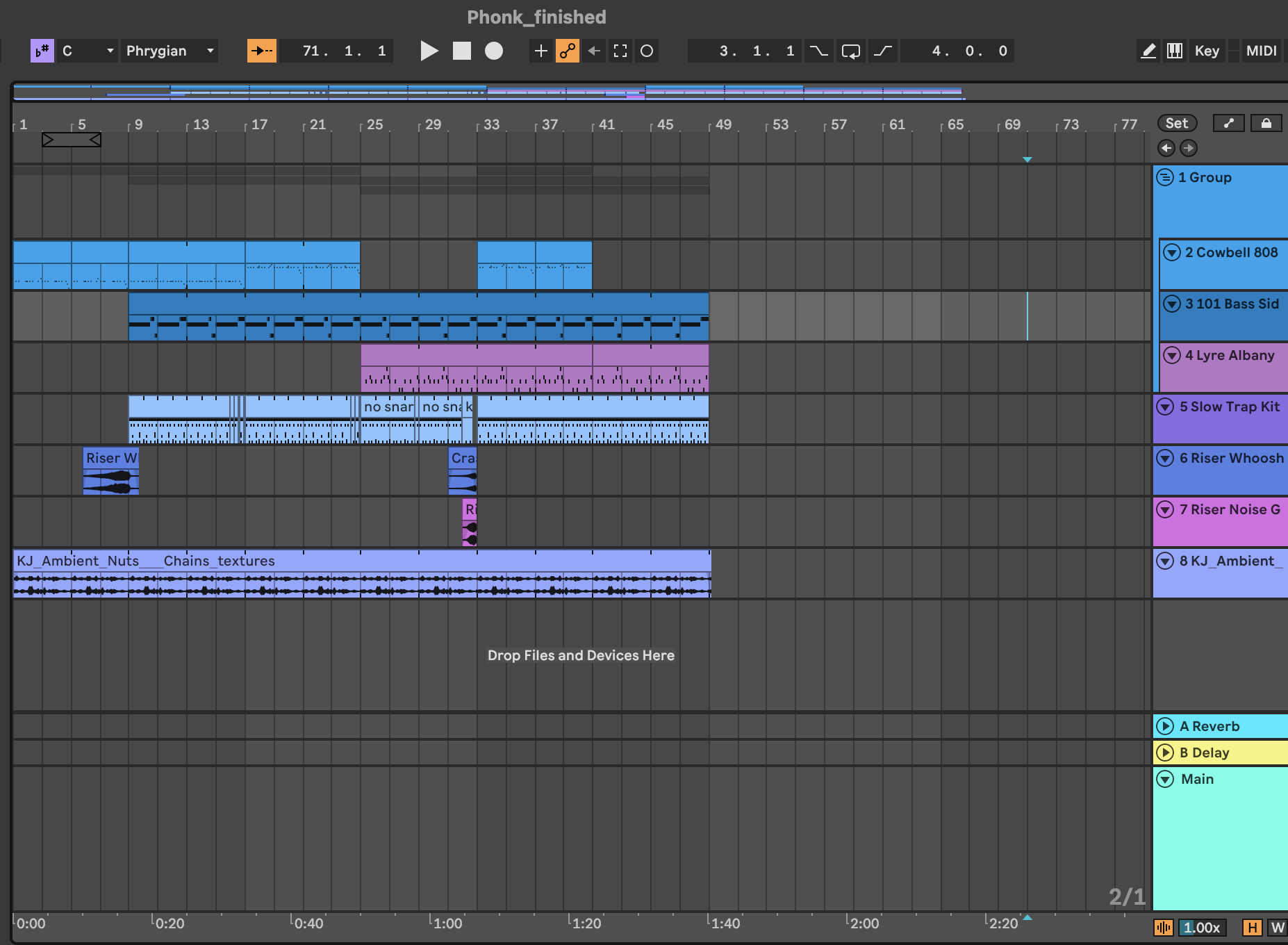
You can checkout project guide I created for students here.


